CNC machining supports industries where precision, repeatability, and material performance directly affect product safety. From aircraft brackets to medical instrument housings, manufacturers depend on controlled cutting processes. That raises a practical question: what industries use cnc machining services the most?
This guide examines ten major sectors, including aerospace, automotive, medical devices, electronics, energy, and robotics. Each industry applies CNC technology differently. Aerospace suppliers may machine lightweight aluminum parts with tight tolerances. Medical manufacturers often require stainless steel, titanium, clean finishes, and careful documentation. Automotive plants usually value production speed, consistent dimensions, and reliable tooling.
The real picture is more complicated. No ranking is perfectly universal. Market size, production volume, regulation, and outsourcing habits can change the order. A small defense supplier may need more precision work than a larger consumer goods factory. That matters.
Professional evaluation should consider more than machine count. Material selection, inspection methods, operator experience, fixture design, and quality records all influence results. Coordinate measuring machines, tool wear checks, and traceable inspection reports help reduce avoidable variation. Certifications such as ISO 9001, AS9100, or IATF 16949 may also matter, depending on the sector.
This overview connects machining demands with real manufacturing conditions. It also recognizes a practical limitation: CNC capability alone does not guarantee a successful part. Design quality, communication, and process control remain essential. Expect overlap between industries, not a rigid winner’s list.
CNC Machining Services: Definition, Processes, and Industrial Role
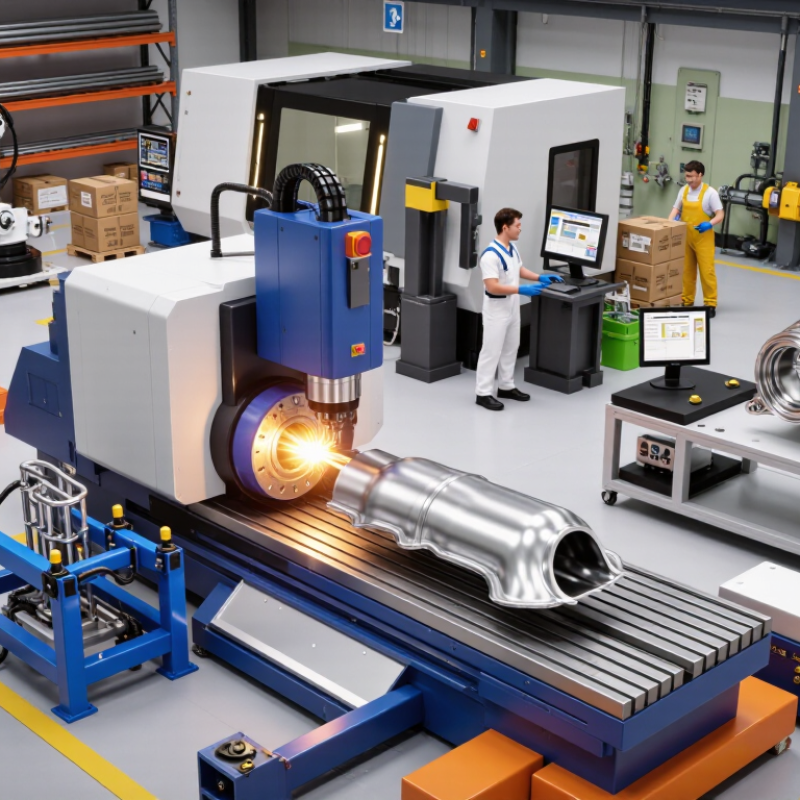
CNC machining services use computer-controlled tools to remove material from metal, plastic, or composite stock. A digital CAD model guides cutting, drilling, milling, turning, and finishing operations. The process converts engineering intent into measured geometry. Small errors still matter.
A 2024 Grand View Research report valued the global CNC machine market at approximately USD 88.56 billion in 2023. Its projected growth reflects rising demand for precise, repeatable production. Aerospace, automotive, medical equipment, electronics, and industrial machinery depend heavily on these capabilities. Medical components may require tight tolerances, while automotive suppliers often prioritize cycle time and volume.
In a typical workshop, a technician checks the drawing, selects tooling, sets work offsets, and verifies the first component. Inspection may involve coordinate measuring machines, gauges, or optical systems. ISO 2768 and industry-specific specifications help define acceptable variation, but they cannot replace practical judgment. Tool wear, heat, vibration, and material movement can change results during a long run.
The process is powerful, not flawless. Poor fixturing can distort an accurate program. An overlooked burr can disrupt assembly. A 2023 report from MarketsandMarkets identified automation and digitally connected production as major CNC market drivers, yet human review remains essential. Better software reduces mistakes, but it does not eliminate responsibility. Precision begins with data and ends with physical verification.
Aerospace and Defense: Precision Components and Strict Standards
Aerospace and Defense: Precision Components and Strict Standards
Aerospace and defense manufacturers rely on CNC machining for parts that must perform under severe conditions. Typical components include structural brackets, actuator housings, sensor mounts, and fluid-system fittings. These parts often use aluminum, titanium, or heat-resistant alloys. Each material demands different cutting speeds, tooling choices, and cooling methods.
Small errors can create serious problems. A slight hole-position shift may affect assembly alignment. Excessive tool wear can leave rough surfaces or hidden dimensional changes. Experienced machinists monitor cutting loads, temperature, vibration, and tool condition during production. Coordinate measuring machines verify critical dimensions, while surface-finish checks support reliable movement and sealing. Traceability records connect each part with its material certificate, inspection results, and production route.
The paperwork matters too. Controlled drawings, revision management, process validation, and first-article inspection reduce avoidable mistakes. Operators may repeat a measurement when the result looks unusual. That habit is valuable, even when production schedules feel tight. However, no process is perfect. Thermal expansion, fixture pressure, and programming oversights can still cause unexpected variation. Reviewing these failures honestly helps teams improve inspection points and machining methods. In this sector, precision is not only a number on a report. It is a daily discipline built through careful work, documented evidence, and continuous reflection.
Automotive and Transportation: Prototyping and High-Volume Production
Automotive and transportation manufacturers use CNC machining for prototypes, tooling, replacement parts, and production components. The scale is substantial. According to the International Organization of Motor Vehicle Manufacturers, global vehicle production reached 93.5 million units in 2023, an increase of about 10% from 2022. Such volume demands repeatable dimensions, stable processes, and measurable quality.
CNC machining helps engineers test engine mounts, suspension brackets, housings, and interior mechanisms before committing to expensive tooling. In my experience, a machined prototype exposes problems quickly, especially around fit, vibration, and heat. Speed matters. However, a prototype that fits perfectly may still fail during continuous production. That assumption fails. Material distortion, tool wear, and inconsistent clamping can appear only after hundreds of cycles.
Electrification is also changing machining requirements. The International Energy Agency reported nearly 14 million electric car sales worldwide in 2023, representing about 18% of total car sales. Electric platforms require lightweight housings, cooling components, battery structures, and motor parts with tight tolerances. For high-volume work, automated inspection and process monitoring reduce variation between batches. Yet CNC is not automatically the best answer. Complex geometries, low quantities, or rapidly changing designs may justify additive or molded processes instead. Engineers should compare cycle time, material waste, tolerance needs, and lifecycle cost before selecting the process. Industry reports provide direction, but shop-floor evidence still decides what works.
Top 10 Industries Using CNC Machining Services the Most
Automotive and transportation lead CNC demand through rapid prototyping, precision components, tooling, and high-volume production.
The chart presents an estimated global CNC machining service demand mix by end-use industry. Automotive and transportation account for the largest share because manufacturers require repeatable tolerances, lightweight metal parts, production tooling, and fast prototype iterations.
Medical and Dental Manufacturing: Custom Parts and Biocompatible Materials
Medical and dental manufacturers use CNC machining for custom parts that demand tight tolerances and dependable surfaces. These parts may include surgical instrument components, implant tools, dental fixtures, and compact device housings. Each design begins with a practical question: where will the part touch tissue, fluids, or another component?
Small errors matter. A sharp edge can damage soft tissue. A poor bore can affect alignment during a dental procedure. Engineers often select titanium, medical-grade stainless steel, or suitable engineering polymers for strength and biocompatibility. The material alone is not enough. Cutting fluids, tool wear, residue, and surface treatment can influence the finished part.
Cleanliness is critical. So is traceability. Machined components need documented material certificates, inspection results, and controlled handling. Coordinate measuring equipment can verify dimensions, while visual checks reveal burrs or unexpected marks. Surface roughness also deserves attention, especially on parts exposed to biological environments. A mirror-like finish is not always the correct choice.
Perfect first passes are uncommon. A drawing may overlook cleaning access or sterilization effects. That weakness should be discussed early, not hidden after production. Experienced teams review tolerances, tool paths, and inspection points before machining begins. They also test how a custom part fits the complete medical or dental assembly. Small revisions often prevent larger failures later. Precision is valuable, but disciplined verification makes it reliable.
Energy, Electronics, and Other Major CNC-Using Industries
Energy manufacturing is a major user of CNC machining services. Turbine housings, pump bodies, valve seats, and battery-production fixtures require tight tolerances. The International Energy Agency’s World Energy Investment 2024 report estimates global energy investment will exceed 3 trillion dollars. Clean-energy investment represents more than 2 trillion dollars. This spending does not directly measure CNC demand. However, it signals expanding production for equipment with complex metal components.
Electronics production also depends on precise machining. CNC processes create heat sinks, sensor mounts, connector molds, and testing fixtures. The World Semiconductor Trade Statistics forecast semiconductor sales at about 611 billion dollars in 2024. That figure is not a CNC statistic, which matters. Still, growing chip output usually increases demand for accurate tooling and specialized production hardware. Small errors can distort alignment across a production line.
Other heavy users include automotive, aerospace, medical equipment, and industrial automation. The International Federation of Robotics recorded 541,302 industrial robot installations worldwide in 2023. CNC machining supports many robot arms through custom joints, bases, and maintenance parts. In medical manufacturing, surface finish and traceability often matter as much as speed. Cost remains a difficult variable. Energy and electronics companies may need rapid prototypes, but repeated design changes can make early machining decisions inefficient. I have seen this overlooked, especially when engineers optimize geometry before checking manufacturability.
FAQS
CNC machining uses computer-controlled tools to remove material from metal, plastic, or composites. A digital CAD model guides cutting, drilling, milling, turning, and finishing. Small errors still matter.
Aerospace, automotive, medical equipment, electronics, and industrial machinery use CNC production. Medical parts often need tight tolerances. Automotive parts may prioritize speed and high output.
A technician reviews the drawing and selects suitable tools. They set work offsets and verify the first component. Production then continues with inspections and adjustments.
Coordinate measuring machines, gauges, and optical systems check dimensions. Visual inspection can reveal burrs, scratches, or unexpected marks. Physical verification remains essential.
Tool wear, heat, vibration, and material movement can change dimensions. Poor fixturing may distort an accurate program. Software helps, but it cannot replace judgment.
These parts often require dependable surfaces and tight tolerances. Examples include instrument components, dental fixtures, and compact device housings. A sharp edge can damage soft tissue.
Titanium, medical-grade stainless steel, and suitable engineering polymers are common choices. Material selection alone is not enough. Residue, cutting fluids, and surface treatment also matter.
Medical and dental components need documented material certificates and inspection results. Controlled handling reduces contamination risks. Cleaning access should be considered before machining begins.
Not always. Drawings may overlook sterilization effects, assembly fit, or cleaning access. Early review can prevent larger failures later, although no process is flawless.
Conclusion
CNC machining services use computer-controlled equipment to transform digital designs into accurate components through processes such as milling, turning, drilling, and grinding. Their repeatability, flexibility, and ability to work with metals, plastics, and specialized materials make them essential for both prototypes and large-scale production. This overview explains what industries use cnc machining services the most and why precision manufacturing is important across modern supply chains.
Aerospace and defense manufacturers depend on CNC machining for lightweight, reliable parts that must meet demanding performance and quality standards. Automotive and transportation companies use it to develop prototypes, produce complex components, and support high-volume manufacturing. Medical and dental manufacturers require customized parts, surgical tools, and components made from biocompatible materials, where accuracy and surface quality are critical. CNC machining also plays a major role in energy, electronics, industrial equipment, robotics, and consumer products by enabling compact designs, durable assemblies, and consistent production. Together, these industries demonstrate how CNC technology supports innovation, safety, efficiency, and dependable product development.

 HYDRA CNC